



Construction Accident Attorney Massachusetts
Get Compensated for the Injuries You Suffered After a Construction Accident
If you are looking for a construction accident attorney in Massachusetts The Law Offices of Barry Feinstein & Affiliates P.C. is a legal firm that can provide you with experienced legal representation in cases related to workplace injuries, especially those that happen on construction sites.
Our legal team has years of experience in handling personal injury and workplace accident lawsuits, and we are well-equipped to fight for the compensation you deserve. We understand the federal and state regulations that govern construction accidents, and we can help you navigate the legal process to get the compensation you deserve.
Construction accident lawsuits can be complicated due to various liability issues, which is why it’s important to seek help from a lawyer with experience in dealing with third-party injury claims. Our law firm has the necessary resources to fight against insurance companies that refuse to provide the compensation you deserve. Contact our personal injury attorney today to learn how we can assist you with your construction accident case.
Why Do I Need a Construction Accident Attorney in Massachusetts?
If you’ve suffered an injury from a construction accident in the workplace, you don’t need to worry about negotiating with an insurance company to receive your benefits. Our dedicated construction accident attorney in Massachusetts can assist you in building a solid case to obtain the highest possible benefits.
Our committed team has secured multiple injury awards and settlements, so you can rely on us to handle all aspects of your claim, such as:
- Providing trustworthy legal advice
- Conducting a comprehensive investigation into your accident
- Collecting evidence to prove causation and liability
- Examining alternative options to recover compensation through third-party claims
- Collaborating with medical professionals to assess the extent of your injuries and their impact on your life
- Engaging in negotiations with insurance companies to prevent minimizing your injuries and damages
- Pursuing legal action in court if required to ensure just compensation
What Are Your Rights as a Construction Worker in Massachusetts?
Despite the inherent danger of construction sites, it is the responsibility of construction companies to provide a reasonably safe working environment for their employees. When a construction company or other negligent party fails to fulfill their duty of care towards workers, it may result in severe injuries that can impact one’s career and future.
To establish a strong case and seek fair compensation, it is crucial to be aware of your rights following a construction accident. Our team of personal injury lawyers can assist you in comprehending your rights and fighting for a favorable outcome.
Right to a Safe Workplace
Although construction sites are inherently hazardous, you are entitled to a safe work environment. Your employer has a duty to take appropriate steps to prevent accidents and protect workers’ safety. To fulfill this obligation, employers must implement safety measures such as:
- Personal Fall Arrest (PFA) systems
- Guardrail systems
- Hole covers
- Harnesses
- Safety gear
- Secure scaffoldings
If your employer fails to provide a safe work environment and neglects their responsibility to protect their workers, we can help you hold them accountable for their negligence.
Right to Workers’ Compensation Package
As a construction worker, you are entitled to a workers’ compensation package as part of your employment benefits. This insurance enables employees to file a claim in case of injuries resulting from a construction accident. The compensation received from these claims can cover medical expenses, lost wages, and other damages.
If a wrongful death occurs, family members may file a claim on behalf of the employee. However, while filing a claim after an accident might seem straightforward, your employer may dispute or reject your claim, offering you an amount that does not adequately compensate for your losses.
Therefore, it is crucial to consult with our construction accident attorney in Massachusetts to better understand your options and receive fair compensation.
What Are the Most Common Causes of Construction Accidents in Massachusetts?
Construction workers often operate in hazardous environments where accidents can result in catastrophic consequences. Due to the complex nature of construction sites, many factors and individuals play a role in ensuring safety, which means accidents can stem from various causes, such as the following:
Falls
Working at great heights, such as on scaffolding, rooftops, or ladders, can pose a significant risk of falls and severe injuries due to unsafe or inadequate conditions.
Falling Objects
On construction sites, objects such as tools, scaffolding parts, or building equipment may fall from great heights if they are not appropriately managed or secured.
Electrocution Accidents
During the construction of a site, there may be exposed wires, incomplete electrical systems, and fallen power lines, which can put construction workers at a high risk of electrocution if they are not warned or informed.
Explosions
Exposed wires can be a fire hazard and even cause explosions. Additionally, gas leaks on the construction site may also result in similar accidents, which can cause severe burns and injuries to workers.
Slip and Fall Accidents
Although this type of accident might not appear to be severe, the victims could end up with significant injuries if they are not informed of the potential dangers in the area.
Equipment Accidents
Construction workers frequently use hazardous equipment such as bulldozers, cranes, and jackhammers. If the machinery is not functioning correctly or the user has not trained adequately, the worker may suffer severe injuries.
Caught Between Materials
You may suffer severe injuries and a lack of oxygen if you become trapped between a wall and collapsed debris due to someone’s negligence.
Ground of Trench Collapse
Inadequate inspection or construction of the ground can result in unstable terrain, leading to accidents where workers may be injured due to trench or ground collapses.
Hit by a Vehicle
Construction sites located near highways pose a significant risk to workers as there is a high probability of being struck by a vehicle driven by a careless driver.
Overworking
Construction workers frequently work in extreme weather conditions and put in long hours. Working in these circumstances can lead to health problems, including dehydration, fainting, and in severe situations, strokes.
No matter how serious your injuries are or what kind of construction accident you have been involved in, you have the right to receive compensation that is fair for the damages you have suffered. Our personal injury lawyer is available to assist you in creating a robust claim and making sure the responsible party is held accountable for their actions.
What Are the Most Common Injuries Caused by Construction Accidents in Massachusetts?
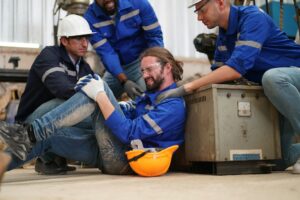
Construction accidents in Massachusetts can lead to various injuries, ranging from minor cuts and bruises to life-changing injuries like spinal cord or brain injuries. Some common types of injuries that workers may sustain include:
Spinal Cord Injury
Construction accidents can cause serious injuries, and one of the most severe types of harm is damage to the spinal cord. This type of injury is common among victims of vehicle accidents and falls from high places. When a worker’s spinal cord is damaged, they may experience intense pain and lose their mobility.
In some cases, the victim may become completely paralyzed. Spinal cord damage can have long-lasting effects on a worker’s ability to work and enjoy their life. Our construction accident attorney in Massachusetts can assist workers who have suffered spinal cord damage in seeking fair compensation for the many damages they have incurred.
Fractured Bones
Construction accidents in Massachusetts can result in broken bones, which is a common type of injury. Sufferers often have to stay away from work for a long time, and some may even need surgery.
Traumatic Brain Injuries (TBIs)
Construction accidents can cause Traumatic Brain Injuries that can be particularly severe. These types of injuries are often the result of a forceful impact on the head, such as being hit by a falling object at a construction site. TBI can significantly impact a person’s life, making it difficult to engage in the same activities they enjoyed before the accident.
Our personal injury lawyer can assist individuals who suffered TBI due to a construction accident in obtaining compensation for physical pain and emotional distress.
Soft Tissue Injuries
Construction accidents often result in soft tissue injuries, which refer to damage to the body’s muscles, tendons, or ligaments. These injuries can cause severe pain and hinder a worker’s mobility. However, workers who have suffered such injuries may be entitled to compensation for their damages.
What to Do Following a Construction Accident in Massachusetts?
Although construction work is considered a dangerous occupation, employees have legal protection if they get injured while on the job. Workers’ compensation laws usually cover construction injuries.
Nevertheless, an injured construction worker may need to file a personal injury lawsuit if their needs are not met. To safeguard their rights following a construction accident, workers should consider taking the following measures:
Obtain Immediate Medical Care
It is important to seek medical attention right away after a construction accident, even if you do not feel hurt. You should see a doctor to have your injuries assessed. If your injuries are severe, dial 911 immediately.
Otherwise, go to a medical facility, such as an emergency room or a doctor’s office, to have a check-up. Let the medical professional know that you were hurt on the job so they can document your injuries and their cause. This record can support your claim and make it stronger.
Notify Your Employer of the Accident
Once you have received the necessary medical care, it’s important to inform your employer about the accident and any injuries you may have sustained, no matter how minor they may seem.
Reporting the incident creates an official record of the accident, which can be used to identify and address any unsafe practices that contributed to the incident. Additionally, if you need to file a workers’ compensation claim, reporting the accident promptly can help your case.
Collect Evidence and Valuable Information
To file a successful claim against a liable party, you need to prove that their negligent actions caused the accident and your injuries. Gathering evidence is crucial to strengthen your claim and get full compensation. Some evidence you can collect includes:
- the contact information and statements of witnesses
- photos of the accident scene
- documentation of the accident and your injuries
- broken equipment involved in the accident
- any correspondence with your employer
All of this information is necessary for us to conduct an in-depth investigation of your claim and demonstrate the severity of your accident and injuries to fight for fair compensation.
Consult an Experienced Construction Accident Attorney
If you’ve been injured in a construction accident due to someone else’s fault, it’s essential to focus on your recovery. Our construction accident attorney in Massachusetts can take care of your claim and fight for your rights while you rest and heal.
We have extensive experience in handling construction accident cases and can help you through every step of the process. You can trust us to investigate your case and ensure that you receive the compensation you deserve.
Who Can Be Held Liable for Your Construction Accident Injuries?
In most cases, when an employer has workers’ compensation insurance, they are usually protected from personal injury lawsuits. This means that you cannot sue your employer for personal injury if they have workers’ compensation insurance.
But there are situations where you can sue your employer even if they have workers’ compensation insurance.
The Site Owner
In such situations, determining liability often depends on how much control the owner has over the property, as opposed to how much control they have over the actual work being performed.
The General and Subcontractors
According to OSHA regulations, it is the responsibility of both general contractors and subcontractors to ensure a safe construction site for workers. They are required to warn of any hazards on site or inherent in the job and ensure that work is conducted following safety regulations.
If a worker is injured, and it is found that a contractor or subcontractor failed to fulfill these duties, the injured worker may have grounds to seek compensation for any losses incurred.
The Prime Contractor
In construction projects, prime contractors are only held responsible for the work they agreed to do in their contract, or for any work they assigned to subcontractors if they have complete control over them.
The Architect and Engineer
To make sure construction projects follow plans and building codes, architects and engineers may have a responsibility to check the work as it progresses. It’s important to know what specific duties were listed in their contract with the construction company to determine if they may be liable for any injuries that occur.
The Manufacturer
If a defective product causes injury, any party involved in the distribution chain, such as the manufacturer, retailer, or wholesaler, can be held responsible.
What Are the Different Types of Construction Injury Claims You Can File?
Various types of injury claims depend on the circumstances surrounding the incident. Please contact us for advice. Below are some ways to obtain compensation for your injuries:
Personal Injury Claim
We assist you in demonstrating that the third party acted negligently in a personal injury lawsuit and that this negligence was the cause of your injury.
Product Liability Claim
We investigate the cause of your injury when it is due to a defective product. We look for who in the distribution chain may be held accountable for such cases. Defective products can be caused by design defects, manufacturing defects, or marketing defects.
Wrongful Death Claim
Construction accidents can be devastating and result in the loss of life. In such cases, the family of the deceased can seek legal representation to file a wrongful death claim. This type of claim can help the family recover compensation for the loss of their loved one and any related expenses such as medical bills and funeral costs.
Our dedicated construction accident attorney in Massachusetts can assist you in navigating the legal process and obtaining justice for your loved one.
Workers’ Compensation Claim
In most cases, an employee who gets injured at work cannot file a lawsuit against their employer. Instead, they are eligible for workers’ compensation benefits. If you have been injured on the job and can demonstrate that, you can apply for workers’ compensation benefits.
If your claim is approved, you are entitled to receive those benefits. Additionally, you can seek workers’ compensation benefits and file claims against a third party.
Do I Need to Prove Negligence After My Construction Accident in Massachusetts?
You don’t have to prove that your employer was at fault to receive workers’ compensation benefits in Massachusetts. This is because it is a no-fault system that entitles you to benefits even if you were responsible for your accident, with a few exceptions. However, if you want to file a claim against a third party, you’ll need to prove negligence.
This means you’ll have to show that the third party had a duty to care for you, violated that duty, and caused your accident. Depending on what caused your accident and who is responsible, evidence like accident reports, witness statements, and strict product liability laws may be used to establish liability.
Our personal injury lawyer may conduct an in-depth investigation to pursue these claims.
What Damages Can I Recover From My Construction Accident Injury Claim?
Construction accidents can be devastating, causing a lot of physical, emotional, and financial harm to victims and their families. The medical expenses and long-term effects of injuries can be overwhelming, and coping with emotional trauma can be a challenge.
Our competent Massachusetts construction accident attorney can help you file a lawsuit against the party responsible for your injury, which may enable you to recover:
- Loss of earnings
- Medical bills
- Counseling expenses
- Physical treatment
- Damage to property
- Recurring living costs
- Mortgage and rental payments
- Pain and suffering
- Lack of companionship for widows and widowers
If you have been hurt in a construction accident and think you can file a claim for your injuries, the personal injury lawyers at The Law Offices of Barry Feinstein & Affiliates P.C. can assist you with your construction accident injury case.
When Should You File a Construction Accident Injury Claim in Massachusetts?
Injured construction workers may need to seek compensation through workers’ compensation to cover medical expenses and lost wages resulting from their injuries.
However, in construction accident lawsuits, plaintiffs can recover both economic and non-economic damages. However, not all types of accidents can hold the at-fault parties responsible for damages.
Defective Product Accidents
Defective and dangerous products often lead to harmful construction accidents. A worker can suffer severe injuries due to defective safety equipment or malfunctioning machinery. Manufacturers can be held responsible for accidents caused by their defective products, which can be due to faulty design, manufacturing, or marketing negligence.
However, proving that a product was defective can be a complicated process that often requires expert witness testimony. The support of our personal injury lawyer can be very beneficial when seeking to hold a manufacturer accountable for their negligent product that caused an accident.
Third-Party Contractor Accidents
Construction sites are busy places where different contractors work on various tasks simultaneously. When one contractor behaves negligently, it can cause harm to other workers sharing the site. For example, if an electrician leaves loose wires strewn across a public workspace, it can cause another worker to suffer a serious slip and fall accident.
Negligent third-party contractors can be sued for construction accidents they cause. If you were injured due to another contractor’s careless behavior, you could contact our Massachusetts construction accident attorney for help in determining whether you can file a lawsuit against the at-fault party.
Employer’s Negligence
When construction accidents occur due to an employer’s negligence, injured workers typically cannot sue their employers. Instead, they can file a workers’ compensation claim to receive payment for their injuries.
However, there are rare circumstances where an employer can be sued for a construction accident, such as when they do not carry workers’ compensation insurance. If you’ve been injured in a construction accident, our personal injury attorneys can help you explore your legal options and determine the best course of action for your situation.
What is the Time Limit to File a Construction Accident Injury Claim in Massachusetts?
To bring a construction accident lawsuit in Massachusetts, you need to file it within the time limit set by the state’s statute of limitations. In most cases, you have three years from the date of your construction accident to file your case in court.
There are exceptions to this rule for the following:
- Minors who are 3 years from reaching 18, or
- People with mental disabilities.
In these cases, the time limit “clock” is paused or “stayed.” This means that the three-year time limit doesn’t start running until the stay is removed, which could happen when the minor turns 18 or the person with a disability becomes capable of pursuing a legal claim.
Waiting too long to file your lawsuit can cause you to lose your right to recover financial compensation. Additionally, crucial evidence can be lost or destroyed over time. Therefore, it is crucial to contact our qualified construction accident attorney in Massachusetts as soon as possible after your accident to start building your case and protect your legal rights.
Personalized Legal Assistance From Our Experienced Construction Accident Attorney in Massachusetts
Get personalized legal assistance from our experienced construction accident attorney in Massachusetts at the Law Offices of Barry Feinstein & Affiliates P.C. Our team of personal injury attorneys has years of experience handling complex construction accident cases, and we are dedicated to fighting for the rights of victims who have been injured or suffered damages due to negligence in the construction industry. We understand the challenges that victims face and are committed to helping them recover the compensation they deserve.
In addition to construction accidents, our Massachusetts law firm can assist you with other types of accidents, including motorcycle accidents, blind spot car accidents, hit and runs, pedestrian accidents, teen driver accidents, and truck accidents. Contact us today to learn more about how we can help you.